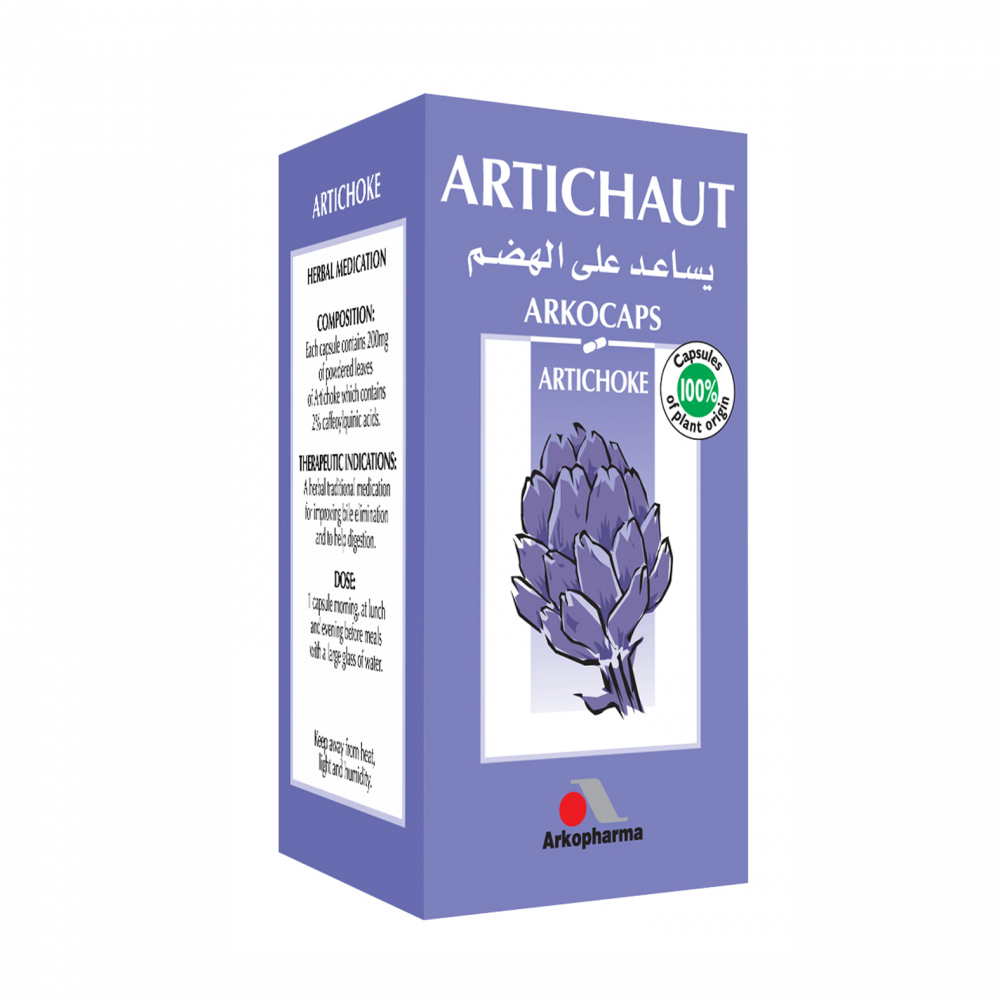
Arko Pharma Artichoke leaves help digestion 45 capsules Artichoke leaves (artichoke) are a herbal medicine known from ancient times to treat many diseases related to the digestive system, such as poor digestion, inability to digest fats, nausea, and a feeling of satiety. Artichoke leaves have also been used for liver patients, where It improves blood flow in the liver cells, which results in the rapid elimination of toxins and harmful substances, whether they are the result of microbes or viruses inside the liver, or they are the result of purifying the blood from unwanted harmful substances that occur inside the liver. Artichoke leaves have been used to stimulate the liver and improve blood circulation in it. , and increase its resistance to various types of harmful toxins
Recently, several clinical trials were conducted on artichoke leaves and it was found that it reduces cholesterol with the same power as the newly discovered chemical drugs, but it is superior to them in two aspects:
- Increases the percentage of high-density cholesterol that is beneficial to the body.
– It does not cause harm to the liver, but rather benefits and stimulates it (as some chemical cholesterol-lowering drugs cause damage to liver cells).
Artichokes have been used as food in Mediterranean countries for thousands of years and have been used medicinally to treat digestive and liver problems for more than 1,500 years. Many studies have been recorded on them, and all their components have been studied, and it has been found that they are all beneficial to the body and have no harm, even if used for very long periods.
Only it is not used in cases of problems in the bile duct (stones, for example).
A traditional herbal plant used to treat symptoms of gastrointestinal disorders such as functional gastrointestinal disorders, feeling of heaviness and flatulence.
It helps treat problems related to:
High blood cholesterol is a serious disease that threatens the lives of many men and women over forty. Cholesterol is the name given to the units of fat that circulate in the blood and are carried by protein molecules designated for that purpose.
Cholesterol is divided into five types according to density:
1- Very low density
2-Low
3- Average
4- High density
5- Very high. The problem with cholesterol lies in one type, which is low-density cholesterol, as its increase causes narrowing of the arteries and thus leads to angina pectoris.
At the same time, high-density cholesterol is very beneficial, as it collects low-density cholesterol from the blood and helps convert it to high-density cholesterol, thus reducing its negative effects.
Studies conducted in the past few years on the rates and number of deaths as a result of cardiovascular diseases have frightened scientists, as it has been shown that about 50% of deaths are due to cardiovascular diseases.
Cholesterol-lowering drugs compete in the strength and effectiveness of reducing LDL cholesterol and not lowering HDL cholesterol.