
Eating too much green beans leads to diarrhea...a phrase we hear every season, but how true is it?
In fact, this saying applies to a specific group of people, who carry the genes responsible for bean anemia.
Here we are not talking about beans only, but rather they are a group of legumes:
- Cowpeas.
- Beans.
- hummus.
And other foods that are a major trigger for Foley's hemolysis.
Now do you want to know what tafawal is? What are its symptoms? Can a bean anemia patient recover?
Follow along with us to get a complete picture of this disease, and so that eating beans will no longer be an obsession to be afraid of.
What is bean anemia?
Bean anemia, bean hemolysis, or favism are all names for a genetic disorder that results in a deficiency of the enzyme glucose 6 phosphate dehydrogenase: G6PD .
This enzyme is responsible for regulating vital reactions in the human body, and its deficiency in red blood cells means a shorter lifespan for these cells, and thus they break down and are destroyed, which results in hemolytic anemia or hemolysis.
Diarrhea is one of the chronic diseases that cannot be cured, and its therapeutic role lies in alleviating the symptoms and protecting the affected person from the factors that incite the appearance of these symptoms, which we will learn about later.
Quick medical information:
There is more than one type of hemolysis, all of which involve the destruction of red blood cells.
Causes of Foley's hemolysis
The main cause of hemolytic anemia is genetic, as this disease is transmitted from parents to children. It is also closely related to the sex of the newborn, as men are usually more susceptible to hemoglobin than women.
The reason is that the genetic gene that causes this disease is linked to the
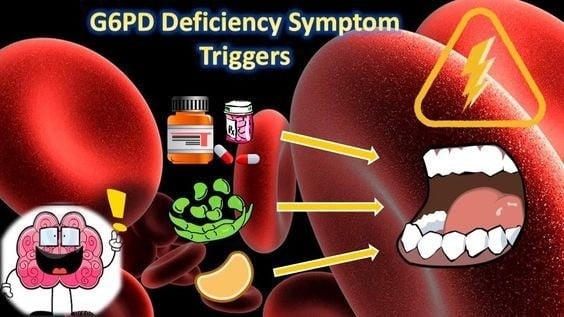
In many cases, the symptoms of this disease do not appear except when eating specific foods, such as dicotyledonous legumes such as beans or kidney beans, or some medications and compounds, and then one must immediately consult a doctor, and not neglect the condition.
Also learn about medication to lower triglycerides and cholesterol
What is the relationship between beans and hemolysis
Beans contain the compounds vicine and convicine , which are metabolized to divicine and isouramil , and these products are very powerful oxidizing agents.
For those who suffer from a deficiency of the enzyme glucose hexaphosphate dehydrogenase (G6PD), the previous oxidizing agents cause hemolysis by disrupting the red cell wall, and this is known as hemolysis or folate hemolysis.
This does not mean that beans are the cause of this disease, but rather beans are an instigator of it, and the cause remains the genetic factor.
Beans have been singled out for mention because they contain a high percentage of the previous compounds, so their effect is greater. However, all of the above applies to a group of other legumes that we will learn about later.
Symptoms of urination
The symptoms that appear in a patient with hemolytic disorder when consuming one of the causes can be summarized as follows:
- Increase in heart rate and acceleration.
- Shortness of breath or severe shortness of breath.
- Constant vertigo and dizziness.
- Body temperature rises to the point of developing a fever.
- Pale skin color.
- Urine is dark and orange in color.
- General fatigue and exhaustion.
- Jaundice is a yellowing of the skin and a clear color in the whites of the eyes.
The previous symptoms may overlap and be similar to symptoms of other diseases, so a doctor should be consulted immediately if they are observed together.
Diagnosis of Foley's hemolysis
Diarrhea is diagnosed through a group of blood tests performed on the patient, which are:
- Blood count check to determine the number of red blood cells and the count of reticulocytes (young blood cells that the body produces to replace damaged and destroyed blood cells).
- Examination of the level of bilirubin in the blood, which is high in evidence of the breakdown and destruction of red blood cells.
- Testing the level of the enzyme lactate dehydrogenase (LDH), whose elevation is one of the indicators of hemolysis.
- Testing the level of glucose hexaphosphate dehydrogenase enzyme in the blood.
Treatment of bean anemia
The basic treatment for treating bean anemia is to avoid eating foods and medications that worsen the patient’s condition, that is, to remove the factor causing the symptoms, which can be:
- One of the types of prohibited foods.
- Using a specific medication to treat another medical condition.
- Inflammation must be treated immediately.
However, once the causative agent enters the body, the severity of the condition and the nature of the treatment followed vary, which may be:
- Transfusing healthy blood to the patient to replace the lost broken red cells.
- Oxygen therapy in the event that the patient's oxygenation decreases significantly due to the inability of red blood cells to perform their function of transporting oxygen.
- The patient may also need to stay in the hospital for several days under observation, and be given intravenous solutions and injections.
- PIVOT 1.5 CAL is a complete and balanced therapeutic nutrition based on peptides for short or long-term tube feeding .
What are the contraindications for patients with diarrhea?
Anemia cannot be cured, so the individual must live with it, avoiding eating several types of foods, as well as some medications and chemical compounds, which work to incite the condition. It can be said that the following types are completely prohibited for any patient with anemia:
- Legumes: especially beans, kidney beans, cowpeas, lupins, lentils, soybeans and their derivatives, or any food that contains one of the previous ingredients, such as falafel.
- Bitter gourd and cranberries.
- Nuts or any food based on them: such as hazelnut cream, peanut butter.
- Foods that contain high levels of vitamin C or K.
- Mint and menthol products: which may be found in sweets, candy, and chewing gum, as well as in processed meats, ready-made salads, and others.
- Aspirin.
- Antibiotics: such as quinolones, fluoroquinolones, Daspone, and others.
- Antimalarials: such as chloroquine.
- Diclofenac sodium.
Specifically to mothers:
If you are a breastfeeding mother and your child suffers from bean anemia, beware of taking the previously prohibited foods because they are transmitted to him through milk.
Tips for bean anemia patients
If you are sick with Foley's hemolysis, this does not mean that you will not be able to live your life on a daily basis. Rather, all you have to do is adhere to a set of healthy habits, which are:
- Visit the doctor periodically and perform the required tests and examinations without delaying their appointments.
- Abstaining from foods and substances that may increase the severity of your condition, which were mentioned in advance.
- Do not take nutritional supplements, especially iron, without consulting the doctor responsible for your condition.
- Eat foods rich in antioxidants such as garlic and tomatoes.
- Before buying any canned food product, read the ingredients written on the packaging. If it contains any legumes or foods that will cause you to miss out, stay away from buying it.
- Stay away from mint gum and candy because they often contain menthol, which triggers your condition.
Frequently asked questions about Foley's hemolysis:
1- What happens if a person suffering from anemia eats fava beans?
Eating fava beans by patients with foliar hemolysis will inevitably cause the patient's health condition to worsen and the symptoms of hemolysis to appear.
2- How do I know that my son has bean anaemia?
Symptoms of bean anemia appear within one to three days of the child consuming the inciting substance. It is not possible to determine whether the child has hemolysis of bean in advance, and in most cases this disease is cumulative, meaning its symptoms may not appear at first.
3- Is hemolytic foley disease dangerous?
No, bean anemia is not dangerous if the patient adheres to the doctor’s instructions and directions, and stays away from eating prohibited foods and medications.
4- Can bean anemia be cured?
No, Foley's hemolysis is a hereditary disease and the genetic makeup of the human body cannot be changed.