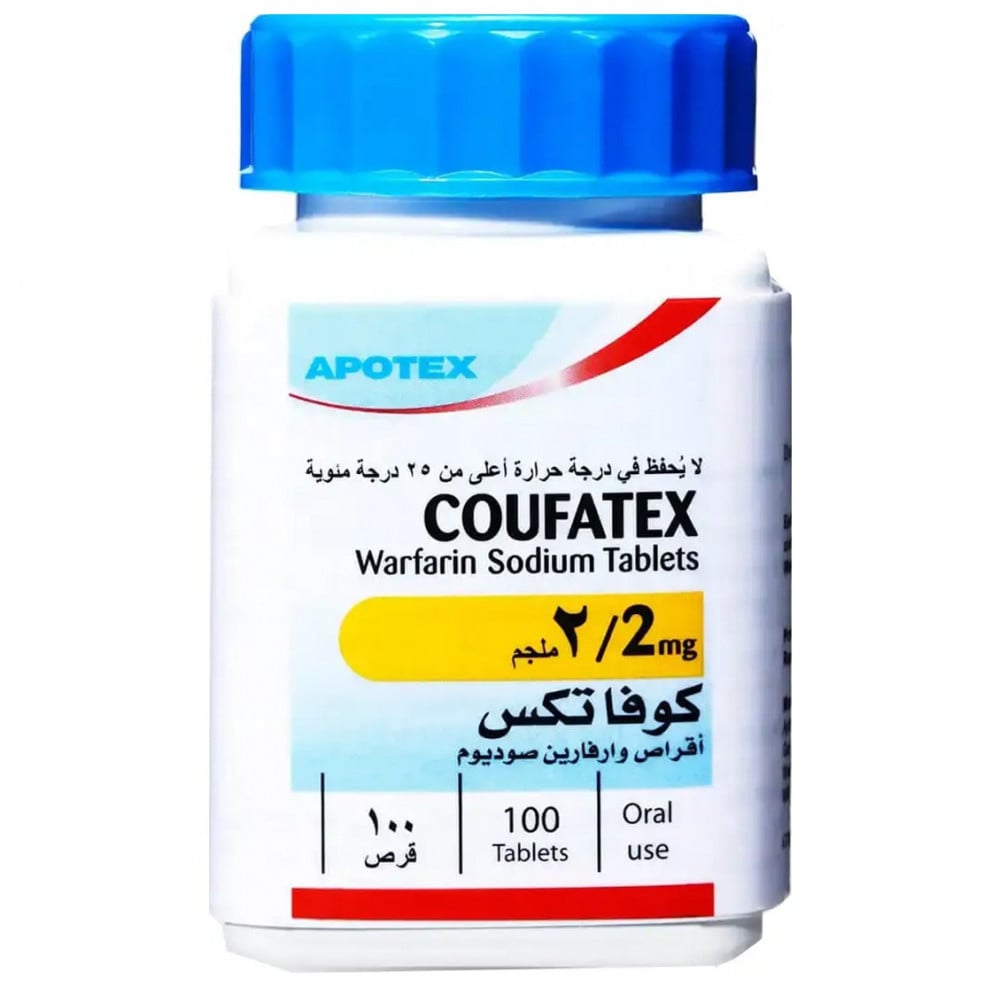
Covatex Warfarin Sodium Tablets 2mg - 100 Tablets Warfarin is an anticoagulant (blood thinner). Warfarin reduces the formation of blood clots. Warfarin is used to treat or prevent blood clots in the veins or arteries, which may reduce the risk of stroke, heart attack, or other serious conditions. Warfarin may also be used for purposes not listed in this medication guide.
Instructions for use:
- Take warfarin exactly as prescribed by your doctor.
- Follow all instructions on your prescription label.
- Your doctor may occasionally change your dose.
- Do not take warfarin in larger or smaller amounts or for longer than your doctor tells you to.
- Take warfarin at the same time each day, with or without food.
- Do not take a double dose.
- Warfarin can make bleeding easier. Seek emergency help if you have any bleeding that won't stop.
- You will need frequent INR or prothrombin time tests (to measure blood clotting time and determine your warfarin dose).
- You must remain under the care of a doctor while taking this medication.
- If you receive warfarin in a hospital, call or visit your doctor 3 to 7 days after leaving the hospital.
- You will need to have your INR tested at that time.
- Don't miss any follow-up appointments.
- Tell your doctor if you are sick with diarrhea, fever, chills, or flu symptoms, or if your body weight changes.
- You may need to stop taking warfarin 5 to 7 days before having any surgery, dental work, or medical procedure.
- Contact your doctor for instructions.
- Wear a medical alert tag or carry an identification card stating that you are taking warfarin. Any medical care provider who treats you should know that you are taking this medication.
- Store at room temperature away from heat, moisture and light.
What happens if I miss a dose:
- Take the missed dose as soon as you remember.
- Skip the missed dose if it is almost time for your next scheduled dose.
- Do not take more medicine to make up the missed dose.
Warnings and precautions:
- You should not take warfarin if you are prone to bleeding due to a medical condition, if you are having upcoming surgery, or if you need a spinal tap or epidural.
- Do not take warfarin if you cannot take it at the scheduled time each day.
- Warfarin increases your risk of severe or fatal bleeding, especially if you have certain medical conditions, if you are 65 years of age or older, if you have ever had a stroke, or bleeding in your stomach or intestines.
- Seek emergency help if you have any bleeding that won't stop.
Call your doctor at once if you have other signs of bleeding such as:
- Swelling, pain, feeling very weak or dizzy, unusual bruising, bleeding gums, nosebleeds, heavy menstrual periods or abnormal vaginal bleeding, blood in your urine, bloody or tarry stools, coughing up blood or vomit that looks like coffee grounds.
- Many other drugs can increase the risk of bleeding when used with warfarin.
- Tell your doctor about all medications you have recently used.
- Avoid making any changes to your diet without talking to your doctor first.
- Some foods can make warfarin less effective.
Before taking this medicine
You should not take warfarin if you are allergic to it, or if:
- You have very high blood pressure.
- You have recently had or will have surgery on your brain, spine, or eye.
- you are undergoing a spinal tap or spinal anesthesia (epidural); Or you can't take warfarin at the scheduled time every day.
You should also not take this medicine if you are prone to bleeding due to a medical condition, such as:
- A blood cell disorder (such as low red blood cells or low platelets);
- Ulcers or bleeding in the stomach, intestines, lungs, or urinary tract. Aneurysm or bleeding in the brain. Or an infection in the lining of your heart.
- Do not take warfarin if you are pregnant, unless your doctor tells you to.
- Warfarin can cause birth defects, but preventing blood clots may outweigh any risks to the baby.
- If you are not pregnant, use effective birth control to prevent pregnancy while taking warfarin and for at least 1 month after your last dose.
- Tell your doctor right away if you become pregnant.
Warfarin can make you bleed more easily, especially if you have ever had:
- High blood pressure or serious heart disease.
- Kidney disease.
- Cancer or low blood cell counts.
- Accident or surgery.
- Bleeding in your stomach or intestines.
- Stroke or if you are 65 or older.
To make sure warfarin is safe for you, tell your doctor if you have ever had:
- Congestive heart failure.
- Liver disease and kidney disease (or if you use dialysis).
- Hereditary hypocoagulability or low platelet count after taking heparin.
- It is not known whether warfarin passes into breast milk.
- Watch for signs of bruising or bleeding in the baby if you are taking this medication while breastfeeding the baby.
What to avoid:
- Avoid activities that may increase the risk of bleeding or injury.
- Use extra care to prevent bleeding while shaving or brushing your teeth.
- You may continue to bleed easily for several days after you stop taking warfarin.
- Avoid making any changes to your diet without talking to your doctor first.
- Foods rich in vitamin K (liver, green leafy vegetables, or vegetable oils) can make warfarin less effective.
- If these foods are part of your diet, eat a consistent amount on a weekly basis.
- Grapefruit juice, cranberry juice, noni juice, and pomegranate juice may interact with warfarin and lead to unwanted side effects.
- Avoid using these juice products while taking this medication.
- Avoid drinking alcohol.
- Ask your doctor before using any medicine for pain, arthritis, fever, or swelling.
- This includes aspirin, ibuprofen (Advil, Motrin), naproxen (Aleve), celecoxib (Celebrex), diclofenac, indomethacin, meloxicam, and others.
- These medications may affect blood clotting and may also increase the risk of stomach bleeding.
Side effects of warfarin:
- Get emergency medical help if you have signs of an allergic reaction to warfarin: trouble breathing; swelling of your face, lips, tongue, or throat.
- Warfarin increases your risk of bleeding, which can be severe or life-threatening.
Call your doctor right away if you have any signs of bleeding such as:
- Sudden headache, feeling very weak or dizzy.
- Unusual swelling, pain and bruising.
- Bleeding gums and nosebleeds.
- bleeding from cuts or needle injections that does not stop;
- Heavy menstrual periods or abnormal vaginal bleeding.
- blood in urine, bloody or tarry stools; or
- Cough accompanied by blood or vomit that looks like ground coffee.
- Clots caused by warfarin may prevent normal blood flow, which may lead to tissue death or amputation of the affected part of the body.
Get medical help at once if you have:
- pain, swelling, feeling of hot or cold, skin changes, or body color change anywhere; or
- Sudden, severe leg or foot pain, foot ulcers, purple fingers or toes.
- Bleeding is the most common side effect of warfarin.
- This is not a complete list of side effects and others may occur.
What other drugs will affect warfarin:
- Many drugs (including some over-the-counter drugs and herbal products) can affect your INR and may increase your risk of bleeding if you take them with warfarin.
- Not all possible drug interactions are listed in this medication guide.
It is very important to ask your doctor and pharmacist before starting or stopping using any other medicine, especially:
- Other medicines to prevent blood clots.
- Antibiotic or antifungal medication.
- Supplements containing vitamin K; Or herbal (plant) products - coenzyme q10, cranberry, echinacea, garlic, ginkgo biloba, ginseng, goldenseal, or st. John's wort.
- This list is not complete and many other drugs can interact with warfarin.
- This includes prescription and over-the-counter medicines, vitamins, and herbal products.
- Provide a list of all your medications to any health care provider who treats you.
the components:
Warfarin sodium is available in 3 concentrations: