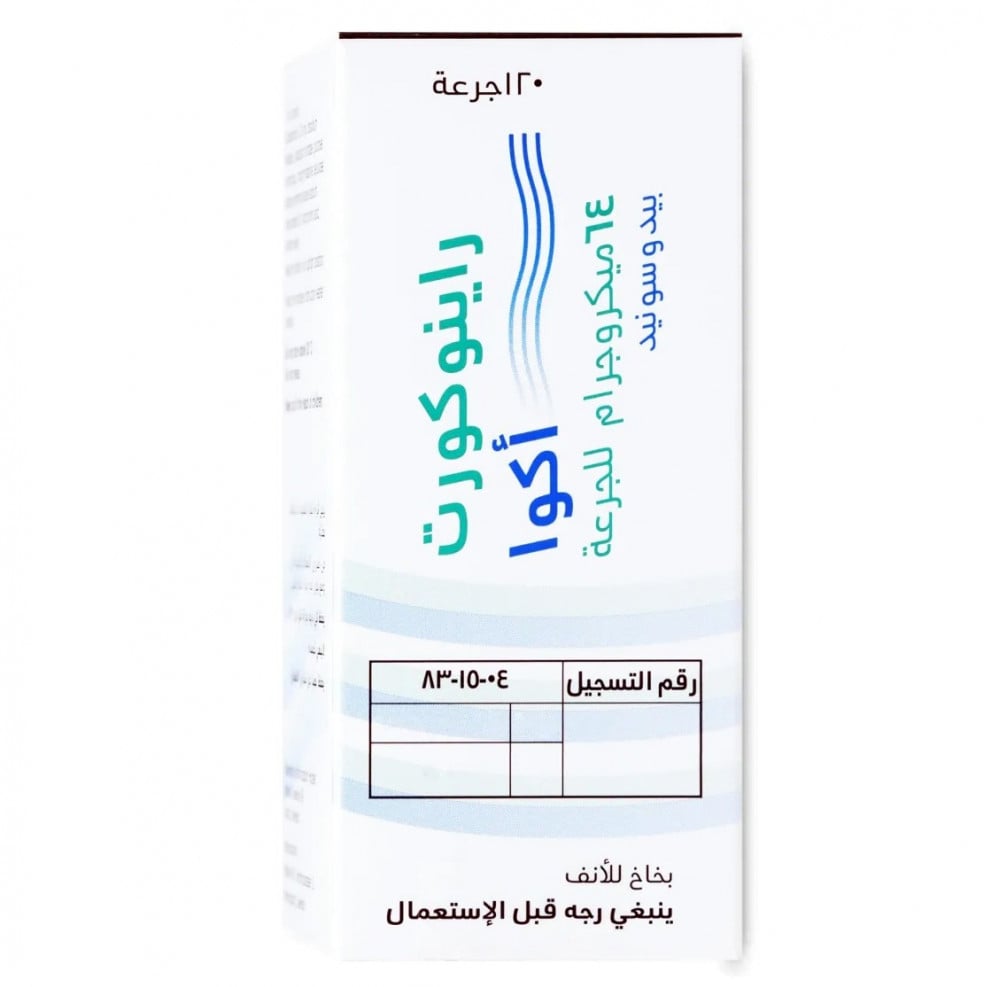
Rhinocort Aqua Nasal Spray 64 mcg What is Rhinocort? How is Rhinocort used in medical conditions? How to use it and what should be considered during the course of taking the drug? Let's find out and analyze what Rhinocort is with YouMed through the article below!
Rhinocort is a nasal spray containing budesonide that is used to treat rhinitis or treat symptoms and prevent nasal polyps. When using the drug, the patient may experience symptoms such as nosebleeds, irritation or blood in the nose. Therefore, you have to follow the advice of your doctor when using it.
The active substance Rhinocort: Each dose (0.05 ml) contains budesonide 64 micrograms.
1. What is Rhinocort?
Rhinocort is prepared in the form of a suspension for a nasal spray. Nasal spray bottle 120 doses.
Rhinocort treats perennial allergic rhinitis, seasonal allergic rhinitis and vasomotor rhinitis. In addition, it is also indicated for the prevention of recurrence of nasal polyps after polypectomy, and the symptomatic treatment of nasal polyposis.
2. Rhinocort dosage
When using Rhinocort, it is necessary to pay attention to the dosage to adapt to each patient. Follow your doctor's instructions. The doses below are for reference only.
Rhinitis
Adults and children 6 years of age and older: Up to 256 mcg/day in each nostril. It can be used in the morning or divided into two times in the morning and evening. Means spray it in each nostril twice in the morning or spray once in the morning, spray once at night. Older adults the same dose as adults.
In cases of severe nasal congestion, additional vasopressors may be given to the patient.
Symptomatic treatment and prevention of nasal polyps
The recommended dose is 256 mcg/day. It can be used in the morning or divided into two times in the morning and evening. Once the desired effect is achieved, the dose can be reduced to the lowest dose that still achieves symptomatic control.
3. Rhinocort contraindications
Patients with known hypersensitivity to budesonide or any of the excipients.
NB:
Long-term use may cause effects such as hyperadrenocorticism, adrenal insufficiency, or growth retardation in children.
Use caution when treating patients with fungal infections or nasal herpes.
Caution should be exercised when the patient pre-administers systemic corticosteroids. Tell your doctor if you are using corticosteroids such as hydrocortisone, prednisone, methylprednisolone, etc.
Patients with impaired liver function will accumulate drugs in the body.
Particular caution should be exercised in patients with pulmonary tuberculosis.
Avoid contact with the eyes of Rhinocort, they should be washed immediately with water.
If it is co-administered with ketoconazole or similar drugs, they should be spaced as far apart as possible.
An overdose of Rhinocort is not a problem. Long-term use of high doses of Rhinocort can cause systemic effects such as hyperadrenocorticism and adrenal insufficiency.
4. Drug interactions when using Rhinocort
Ketoconazole increases the concentration of oral budesonide in the body. No information is available on interactions for the nasal passages (Rhinocort), but with such a mechanism an increase in Rhinocort concentrations can be expected.
Avoid taking the two drugs together, if necessary, use Rhinocort and ketoconazole as far apart as possible.
5. Special issues when using Rhinocort
pregnant
There is no evidence of harm to the fetus. However, to minimize harm to the baby, tell your doctor if you are pregnant, especially in the first months of pregnancy.
Lactating women
The drug can be excreted in breast milk. However, Rhinocort can be used with caution during breastfeeding.
Drivers and machine operators
No effects on the ability to drive and use machines have been reported.
6. Rhinocort side effects
Common: local irritation, slight nosebleeds, epistaxis.
Uncommon: angioedema, urticaria, dermatitis, rash, pruritus.
Very rare: nasal septal perforation, mucosal ulceration. allergic reaction;
7. How to use rhinocort. spray
Before using Rhinocort for the first time, shake the bottle and spray it in the air until it comes out evenly. If you are using again after 24 hours, you must repeat this step before use.
Clean your nose. Shake the medicine bottle. Open the brown protective cap.
Hold the medicine bottle upright.
Put the tip of the bottle in the nose and pump it up according to the dose prescribed by your doctor. Repeat with the other side of the nose.
Close the brown protective cap. Do not overdose on Rhinocort.
Be careful to rinse the plastic parts such as the brown protective cap, and the white nose part with warm water, and let it dry before applying it again.
8. How to store Rhinocort
Store Rhinocort at a temperature below 30°C, in a cool, dry place, protected from light.